

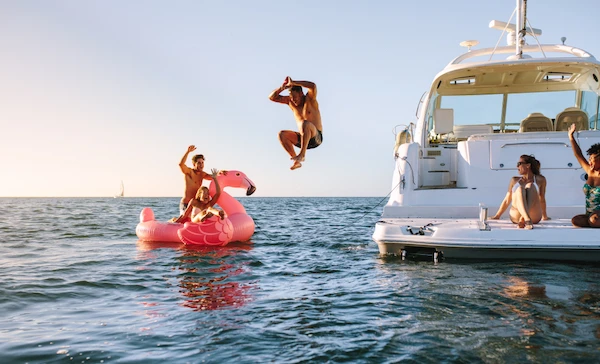
A bareboat charter lets you rent a sailboat or motor yacht without a paid skipper or crew — you’re the captain. It offers incredible freedom to set your own itinerary, drop anchor where you like, and live on the water like a local. But it comes with serious responsibilities. Booking without preparation can lead to stress, extra costs, or safety issues. Here’s what experienced charterers wish they knew before their first bareboat trip.
Understand Qualification and Certification Requirements
Most charter companies require proof you can safely handle the boat. In Europe and many other regions, you need an International Certificate of Competence (ICC) or equivalent. In the US, some companies accept US Coast Guard credentials, sailing resumes, or completion of a recognized sailing course.
Check requirements early — they vary by country, company, and boat size. For example, Greece often demands an ICC plus a competent crew member certificate; the British Virgin Islands may accept a sailing resume showing 100+ days experience. If no one in your group qualifies, many companies offer “skippered bareboat” options or training add-ons. Don’t assume your lake sailing or dinghy experience counts — bareboats are usually 35–50 feet with complex systems.
Choose the Right Boat for Your Group and Experience
Size matters more than you think. A 40-foot monohull might sleep 8, but in practice feels crowded with 6 adults plus gear. Catamarans offer more space and stability but cost more and need different handling skills. Consider:
- Number of cabins vs. people (always leave one cabin free for comfort)
- Draft and height (check for shallow anchorages or bridges)
- Fuel and water capacity (longer routes need bigger tanks)
- Age and condition (newer boats have better systems but higher rates)
Read reviews on the specific model and base marina. Ask about recent upgrades, generator reliability, and air conditioning if chartering in hot climates.
Budget for More Than Just the Base Rate
The quoted charter fee is only part of the cost. Expect these extras:
- Security deposit (often €2,000–€5,000, held on credit card)
- Transit log or end-cleaning fee (€150–€400)
- Dinghy/outboard (sometimes included, sometimes €100–€200/week)
- Fuel (you return full; motor yachts burn far more than sail)
- Mooring fees (€20–€100/night in popular spots)
- Provisioning (€300–€600/person for a week)
- Travel to/from base (flights, ferries, taxis)
Many companies offer “plus extras” packages covering insurance, dinghy, and linens. Compare apples-to-apples when shopping quotes.
Plan Your Itinerary Realistically
Bareboat freedom tempts ambitious routes, but weather, currents, and fatigue set limits. Aim for 15–25 nautical miles per day max on a relaxed trip. Factor in:
- Wind patterns (e.g., Meltemi in the Aegean blows hard afternoons)
- Bridge or lock schedules
- Protected anchorages for overnight
- Time for swimming, exploring, and relaxing
Download offline charts (Navionics, Garmin, or C-Map apps) and study them before departure. Have a “Plan B” for bad weather days.
Master Boat Systems Before Casting Off
The check-in briefing usually lasts 1–2 hours — use every minute. Learn:
- Engine start/stop and cooling system checks
- Electrical panel, battery charging, and inverter use
- Heads (toilets) operation and holding tank rules
- Water maker (if equipped)
- Bilge pumps and emergency procedures
- Anchoring technique for the specific windlass and chain
Take photos or notes during the walkthrough. Test everything while still at the dock.
Get the Right Insurance and Understand Liability
Standard charter insurance covers the boat, but your personal travel insurance may not cover sailing activities. Many companies require you to buy their damage waiver (reduces deposit risk). Check if your credit card offers rental coverage — most exclude boats over 30 feet.
You’re fully liable for negligence. A grounding or collision can cost tens of thousands even with waivers.
Provision Smart and Respect the Environment
Stock up on easy meals — provisioning at marinas is expensive. Bring reusable bags, water bottles, and eco-friendly products. Most areas ban single-use plastics. Learn local rules: no discharging black water near shore, use holding tanks, and follow no-anchor zones over seagrass.
Final Checklist Before Booking
- Confirm qualifications match requirements
- Read cancellation and weather policies
- Check boat photos, layout, and recent reviews
- Ask about backup systems (autopilot, VHF, solar)
- Book early for peak season (summer in Med/Caribbean fills fast)
With Marine Parts like modern chartplotters, reliable autopilots, and updated safety gear now standard on most charter fleets, bareboating is safer and easier than ever — but only if you prepare properly. Done right, a bareboat charter delivers the ultimate sense of independence on the water. Rushed or underprepared, it can become an expensive lesson.