Regular eye health checks are becoming increasingly important in Singapore, where an ageing population, long hours of digital screen use, and a high prevalence of myopia all place significant strain on vision. In addition, chronic conditions such as diabetes and hypertension can have direct effects on eye health, sometimes leading to complications that may not be immediately noticeable. Many serious eye diseases, including glaucoma, diabetic eye disease, and retinal conditions, often develop silently without obvious symptoms in the early stages, making timely detection especially important.
This is where eye screening Singapore plays a crucial role in helping individuals identify potential issues before they progress and affect vision. For those looking to take a proactive step, visiting an eye screening clinic in Singapore can provide a structured and comprehensive approach to assessing overall eye health. In the sections that follow, we will look at what tests are typically included in a comprehensive adult eye screening and why each component matters.
Initial Vision Assessment and Refraction Test
The first step in a comprehensive eye check typically begins with a basic vision assessment to evaluate how clearly a person can see at different distances. This usually involves reading from a standard eye chart to measure visual acuity in each eye. Following this, a refraction test is performed to determine whether glasses or contact lenses are needed, or whether an existing prescription has changed.
This helps identify common refractive errors such as short-sightedness, long-sightedness, and astigmatism. While these tests are often straightforward, they form the foundation of any eye screening Singapore service, as they establish baseline visual function before more detailed examinations are carried out. Importantly, although good vision may feel normal, it does not necessarily mean the eyes are healthy, which is why further screening steps are always necessary in a full adult eye assessment.
Intraocular Pressure (IOP) Testing for Glaucoma Risk
Another essential component of a comprehensive eye screening is the measurement of intraocular pressure (IOP), commonly known as the eye pressure test. This is usually performed using a quick and painless technique called tonometry. Elevated eye pressure is one of the key risk factors for glaucoma, a condition that can gradually damage the optic nerve and lead to irreversible vision loss if not detected early.
What makes glaucoma particularly concerning is that it often develops without noticeable symptoms in its early stages. Many patients continue to see normally until significant and permanent damage has already occurred. This is why IOP testing is routinely included in eye screening Singapore protocols.
It helps identify individuals who may be at risk even before any vision changes are experienced. If abnormal pressure is detected, further evaluation may be recommended to assess the optic nerve and visual field, allowing for early intervention and better long-term protection of vision.
Slit-Lamp Examination of the Front of the Eye
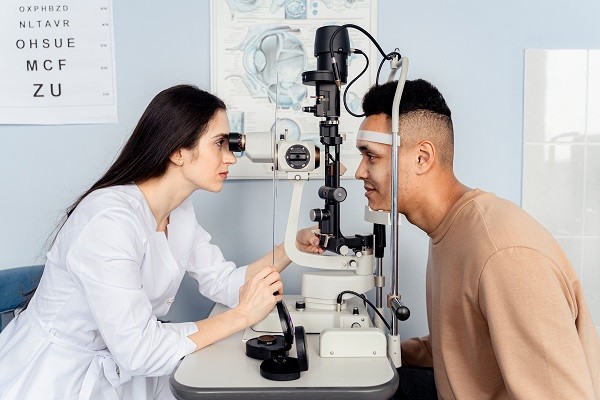
A slit-lamp examination is a key part of a detailed eye assessment, allowing the clinician to examine the front structures of the eye under high magnification. This includes the cornea, conjunctiva, eyelids, iris, and lens. By using a specialised microscope with a focused beam of light, subtle abnormalities that are not visible to the naked eye can be detected with precision.
This examination helps identify a range of common and important conditions such as cataracts, dry eye disease, corneal infections, and inflammation of the eye surface. It can also reveal early changes in the lens that may affect vision over time. In a comprehensive eye screening Singapore setting, the slit-lamp examination plays an important role in ensuring that both structural and surface-level eye health are thoroughly evaluated.
Dilated Fundus Examination (Retina and Optic Nerve Check)
A dilated fundus examination is a crucial part of a comprehensive eye assessment, allowing a detailed view of the back of the eye, including the retina, optic nerve, and retinal blood vessels. This is done by using eye drops to temporarily enlarge the pupils, enabling a wider and clearer examination of internal eye structures that cannot be fully assessed otherwise.
This step is especially important in detecting conditions such as diabetic retinopathy, age-related macular degeneration, retinal holes or tears, and early signs of glaucoma-related optic nerve damage. These conditions can progress quietly in the early stages, often without noticeable changes in vision, which is why they may go undetected without a thorough examination.
Within a full eye screening Singapore process, the dilated fundus examination is considered one of the most informative components, particularly for adults with risk factors such as diabetes, high blood pressure, or a family history of eye disease.
Imaging Tests (OCT and Retinal Photography)
In many modern clinics, imaging tests are an important part of a comprehensive eye assessment, providing detailed and objective information about the retina and optic nerve. Two commonly used technologies are Optical Coherence Tomography (OCT) and retinal (fundus) photography.
These tools complement the clinical examination by revealing subtle structural changes that may not be visible during a routine check.
- Optical Coherence Tomography (OCT): A non-invasive scan that produces cross-sectional images of the retina, similar to an “optical biopsy.” It helps detect early thinning of nerve fibre layers and subtle retinal abnormalities.
- Retinal (Fundus) Photography: Captures high-resolution colour images of the back of the eye, creating a baseline record that can be compared over time to monitor changes in retinal health and blood vessels.
- Clinical value: OCT is particularly useful for detecting early glaucoma changes, macular degeneration, and diabetic macular oedema, while retinal photography supports long-term monitoring, especially in patients with diabetes or hypertension.
In a comprehensive eye screening Singapore programme, these imaging tests significantly enhance diagnostic accuracy.
Conclusion
Regular eye screening is an important part of maintaining long-term vision health, especially as many eye conditions develop quietly without early warning signs. With a structured approach that includes vision testing, pressure measurement, retinal evaluation, and modern imaging, a comprehensive check helps ensure that potential issues are identified and managed at an early stage.
If you would like to arrange a consultation or book a call, you may contact our eye clinic for an appointment. Details below:
Chelvin Sng Eye Centre – Glaucoma | Cataract Surgery | Retina Specialist | Ophthalmologist Singapore
Mount Elizabeth Novena Hospital
38 IRRAWADDY ROAD MT ELIZABETH NOVENA SPECIALIST CENTRE, #06-25, 329563
Phone: 6334 2282