Spring clearing starts before the ground dries out
By mid- september Australian paddocks are drying from the top down, and there is a short period where the surface carries a machine while the soil beneath is still soft enough to work. Blocks cleared over winter are covered in roots, sticks and stone that must come off before anything is sown. A stick rake is the tool for that, and what it leaves behind is decided almost entirely by the gaps between its tines.
The tines are a screen, not a blade
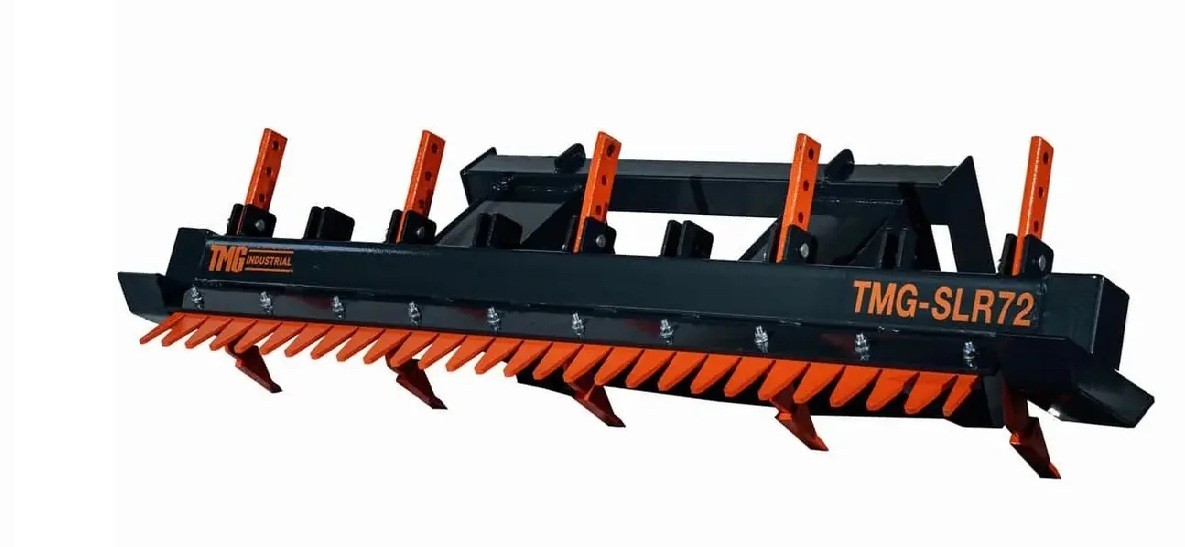
A rake comb neither cuts the ground nor scrapes it. It moves through already loosened material and lets everything below a certain size fall back between the tines, while everything above that size is carried forward and windrowed.
That makes tine spacing an aperture in the same sense a sieve has one. Wide gaps retain only substantial roots and rock and let the fines fall through. Narrow gaps retain far more, and what they retain includes topsoil that was never meant to leave the paddock.
Separating by size is not the same as working to a depth
The distinction matters because the machine is often set as though it were a blade. Pushed down hard, the tines stop screening and start scraping, and at that point they move soil rather than sort it.
The visible result is a windrow that is mostly dirt with some sticks in it, and a stripped surface where the good material used to be. A skid steer stick rake is especially easy to use this way, because the machine has the down pressure to do it without any complaint from the seat.
What a tractor stick rake does that a skid steer one cannot
Suppliers group these by working width, which describes how much ground gets covered in a pass and nothing about the down pressure behind the tines. Sorting by what carries the rake explains why the same comb behaves very differently on two machines.
- Skid steer: high down pressure, precise, small bites
- Tractor three point: fixed height, gentler, wide passes
- Tow behind: follows ground, lowest force, cleanup only
A three point mounting floats over undulations rather than following the operator’s hand, which suits finishing work where a stripped patch would show. A tow behind stick rake has almost no down pressure at all and belongs on material already lying loose.
Ripping first is what makes raking possible
Nothing comes out of the ground while it is still anchored in it. Roots that have not been cut or lifted simply pass beneath the tines, and a tractor stick rake rides over them exactly as a skid steer one does, because neither can grip something the soil is still holding.
That is why these implements pair a ripping shank with the comb. The shank fractures the ground ahead of the tines, and the fracture only happens if the soil is dry enough to crack rather than smear. Ripping wet ground produces a smeared slot that seals itself, which is worse than not ripping.
What is changing in land preparation
Erosion rules are tightening across several states, and the practical effect is pressure to retain fine material on site rather than windrowing everything for the sake of a tidy finish. Wider tine spacing is the simple answer, and it costs nothing to specify.
Set the spacing to the smallest thing worth removing, then rip only as deep as the roots run. TMG Industrial publishes tine spacing alongside working width, and of the two it decides what stays in the paddock.